If you manage a barn, you already know the feed room can get messy fast.
Between loose hay, dusty flakes, broken twine, and constant sweeping, it’s easy for the feed area to turn into one of the hardest spaces to keep clean — especially during busy seasons when horses are eating more and staff is moving quickly.
One simple way many barns reduce the mess is by switching part (or all) of their forage routine to hay cubes. Hay cubes offer a cleaner, more consistent feeding option that can make daily chores easier and your feed room noticeably tidier.
Here’s how.
Loose Hay Creates More Cleanup Than You Think
Traditional loose hay is a staple in most barns, but it naturally creates mess in several ways:
- Hay flakes break apart as they’re carried
- Leaves and fine pieces fall onto the floor
- Stems scatter around the feed room
- Hay dust collects in corners and shelves
- Twine and bale scraps pile up quickly
Even if your barn is well organized, loose hay almost always leads to more sweeping, more waste, and more buildup over time.
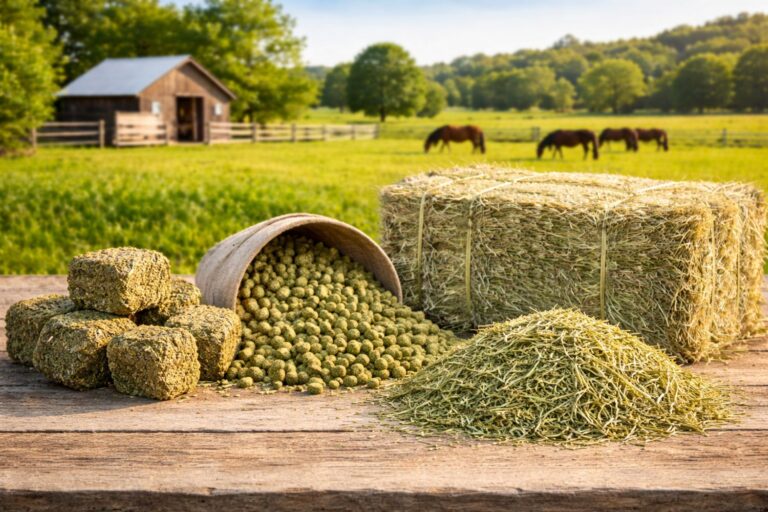
Hay Cubes Are Compressed and Contained
One of the biggest advantages of hay cubes is that they’re compressed into dense, uniform pieces.
That means:
- Less falling debris while carrying feed
- Less loose material floating around the feed room
- Less daily mess from portioning
Because cubes don’t “flake” like loose hay, you get a cleaner process from storage to feeding.
Less Dust in the Feed Room
Dust is one of the most frustrating parts of handling hay.
Loose hay can create dust when:
- Bales are opened
- Flakes are pulled apart
- Hay is shaken out or dropped
- Pieces crumble during feeding
Hay cubes are often easier to manage because they stay compact and don’t break apart the same way. Many barns notice fewer dusty clouds during feeding routines — and less dust settling onto shelves, bins, and equipment.
Easier to Scoop and Measure
Feed rooms get messy when feeding is inconsistent.
Loose hay is often measured by flakes, which can vary in size and weight depending on:
- Bale type
- Cutting
- Moisture
- Compression
- Storage conditions
Hay cubes are easier to portion because you can scoop or weigh them with more consistency.
That means:
- Less overfeeding
- Less spilled forage
- Less wasted hay on the floor
And when your feeding routine is cleaner, your feed room stays cleaner too.
Cleaner Storage (No Loose Hay Piles)
If you’ve ever stored loose hay in a feed room, you know what happens:
A few flakes drop here and there… and suddenly there’s a hay pile in the corner that never goes away.
Hay cubes are typically stored in:
- Bags
- Totes
- Bins
- Palletized stacks
This makes them easier to keep contained and organized — without constant loose hay buildup.
Less Waste Means Less Mess
One of the most overlooked benefits of hay cubes is waste reduction.
Loose hay often leads to:
- Hay getting stepped on
- Hay being dragged out of feeders
- Loose stems left behind
- Horses picking through and wasting more
Cubes can help reduce waste because they’re easier to portion and less likely to be scattered around the stall or feeding area.
And when there’s less waste, there’s less to clean up.
A Cleaner Feed Room Helps Your Whole Barn Run Better
A clean feed room isn’t just about appearances.
It can also mean:
- Faster feeding routines
- Less time spent sweeping
- Fewer pests attracted to loose forage
- Better organization for staff
- Less buildup of dust and debris
For busy barns, small improvements like this add up quickly.
Want to Learn More About Feeding with Hay Cubes?
If you’re looking for a cleaner, easier-to-manage forage option, hay cubes can be a great addition to your feeding program.
To learn more about Paramount Cubing products, visit:
https://paramountcubing.com/
Or find a dealer near you here:
https://paramountcubing.com/find-a-dealer/